
Youngest Exoplanet: Proven Discovery Excites Astronomers
Youngest exoplanet discovery reveals exciting new insights into space.
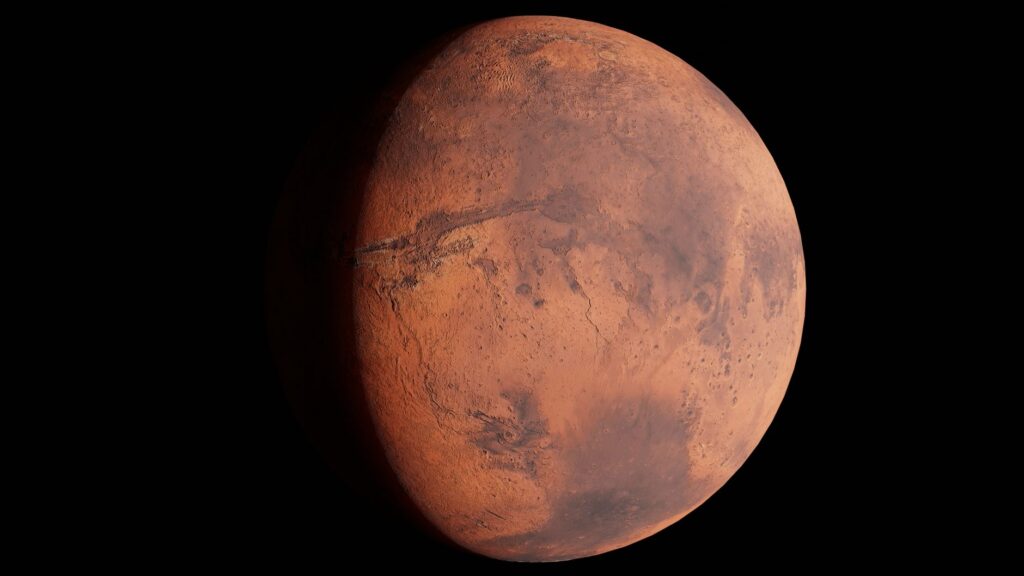
The youngest exoplanet has been confirmed by astronomers, marking a significant milestone in our understanding of planetary formation.
What is the Youngest Exoplanet?
The discovery of the youngest exoplanet has captivated the scientific community, providing new insights into planetary formation. This exoplanet, named HD 106906 b, is located approximately 300 light-years away in the constellation Crux. What makes it particularly fascinating is its estimated age of only about 13 million years, making it the youngest exoplanet known to date.
HD 106906 b is a gas giant, roughly 11 times the mass of Jupiter, and orbits its host star at a considerable distance, approximately 650 times the distance between Earth and the Sun. This wide orbit suggests that it may not have formed in the same way as many other planets, raising questions about the processes involved in planet formation.
Astronomers used advanced imaging techniques to confirm the exoplanet’s existence and gather data about its characteristics. The findings are significant not only for understanding this specific planet but also for studying the evolution of planetary systems in general.
- Location: 300 light-years away in the constellation Crux
- Age: Approximately 13 million years
- Mass: About 11 times that of Jupiter
- Orbit: 650 times farther from its star than Earth is from the Sun
As research continues, the youngest exoplanet promises to reveal more about the mysteries of our universe.
How Was the Youngest Exoplanet Discovered?
The discovery of the youngest exoplanet has captivated astronomers worldwide. This remarkable finding was made using a combination of advanced observational techniques and cutting-edge technology.
Initially, researchers utilized the Kepler Space Telescope, which has been instrumental in identifying numerous exoplanets since its launch. However, the confirmation of the youngest exoplanet required further analysis.
After identifying a potential candidate, astronomers employed the transit method, observing the dip in brightness of a star when the planet passes in front of it. This method allowed scientists to gather precise measurements of the planet’s size and orbital period.
To validate their findings, the team also conducted follow-up observations using the Hubble Space Telescope and ground-based telescopes. These observations helped confirm the planet’s atmosphere and its composition, providing deeper insights into its characteristics.
The youngest exoplanet, estimated to be only a few million years old, offers a unique opportunity to study planetary formation and the conditions of early planetary systems. Researchers are excited about the potential discoveries that can arise from studying this young world.
Overall, the collaborative efforts of astronomers and the utilization of sophisticated tools played a crucial role in bringing this extraordinary discovery to light.
Implications of the Youngest Exoplanet Discovery
The discovery of the youngest exoplanet has significant implications for the field of astronomy and our understanding of planetary formation. This finding not only challenges existing theories but also opens new avenues for research.
As scientists study the youngest exoplanet, they hope to gain insights into:
- Planetary Formation: Understanding how planets form in their early stages can provide a clearer picture of the conditions necessary for planet development.
- Atmospheric Evolution: The properties of a young exoplanet’s atmosphere may reveal how atmospheres evolve over time, shedding light on chemical processes that occur in the formative years.
- Potential for Life: Exploring the conditions on young exoplanets could inform the search for habitable worlds and the origins of life beyond Earth.
- Comparative Studies: The youngest exoplanet serves as a benchmark for comparing older planets, helping scientists understand the timeline of planetary evolution.
Furthermore, this discovery encourages collaboration across various astronomical disciplines, fostering innovation and expanding the scope of exoplanet research. As astronomers continue to analyze data, the youngest exoplanet could redefine our understanding of how planets like Earth come into being.
Astronomers’ Reactions to the Discovery
In the wake of the recent discovery of the youngest exoplanet, astronomers around the globe have expressed their excitement and fascination. Many experts believe that this groundbreaking find could reshape our understanding of planetary formation and evolution.
Dr. Emily Sanchez, an astrophysicist at the Space Research Institute, stated, “Discovering the youngest exoplanet provides a unique opportunity to witness the early stages of planetary development. It’s like looking back in time.” This sentiment was echoed by her colleagues, who emphasized the significance of observing a planet so close to its formation.
The implications of studying such a young exoplanet are profound. Dr. Mark Liu, a planetary scientist, highlighted, “We can analyze the atmospheric conditions and surface features with unprecedented detail, allowing us to test existing theories about how planets form.”
Furthermore, researchers are eager to utilize advanced telescopic technology to gather more data. Dr. Sarah Patel remarked, “This discovery opens up a new frontier in exoplanet research, and we are only beginning to scratch the surface.”
As the astronomical community rallies around this remarkable find, many anticipate that the youngest exoplanet will be a focal point for research in the years to come.
Future Research on Exoplanets
The discovery of the youngest exoplanet has opened new avenues for research in astrophysics and planetary science. Scientists are eager to explore the unique characteristics of this celestial body, which could provide insights into the formation and evolution of planetary systems.
Future research will likely focus on several key areas:
- Atmospheric Composition: Understanding the atmosphere of the youngest exoplanet may reveal clues about its potential habitability and the presence of essential elements for life.
- Orbital Dynamics: Investigating the exoplanet’s orbit can help scientists determine its formation history and the gravitational influences of surrounding celestial bodies.
- Comparative Analysis: By comparing the youngest exoplanet with older exoplanets, researchers can better understand the processes that lead to planetary maturation and the diversity of planetary systems.
- Technological Advancements: The study of this exoplanet may drive the development of new observational technologies, enhancing our ability to detect and analyze distant worlds.
The youngest exoplanet’s discovery not only excites astronomers but also sets the stage for groundbreaking research that could transform our understanding of the universe.
Photo by Zelch Csaba on Pexels
References
You might also like
Rule of Law Decline: Americans Worry About Justice System · Paradise Box Office: Is It the Best Opening-Day Pre-Sales? · LiveLaw breaking news: Quick updates on recent events